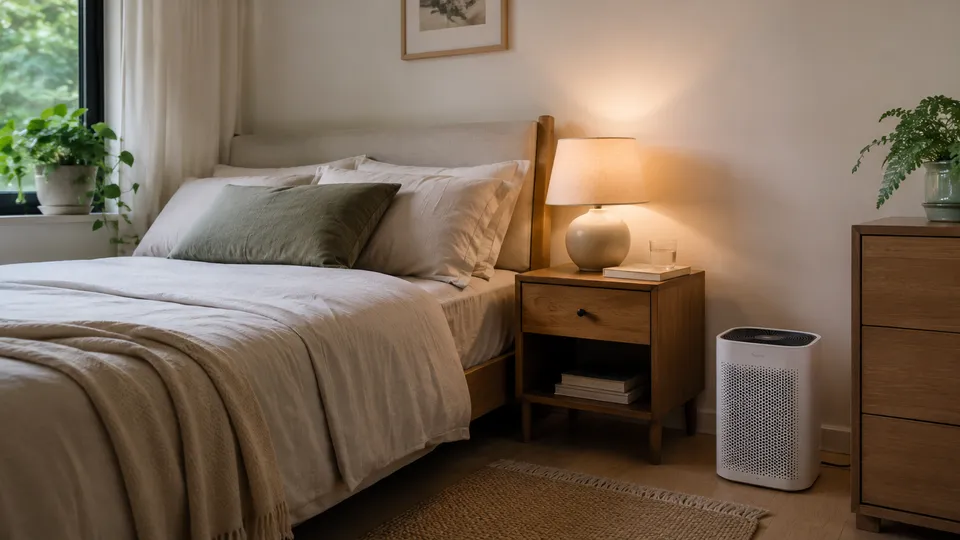
A bedroom air purifier has one job in your home: make the room feel easier to live in. But when you start comparing filter labels, the choice can get confusing quickly.
One model says True HEPA. Another mentions activated carbon. Some talk about smoke, dust, pollen, pet dander, odors, VOCs, or fresh air. For a beginner shopper, it can sound like every filter is supposed to do everything.
That is not how air purifier filters work.
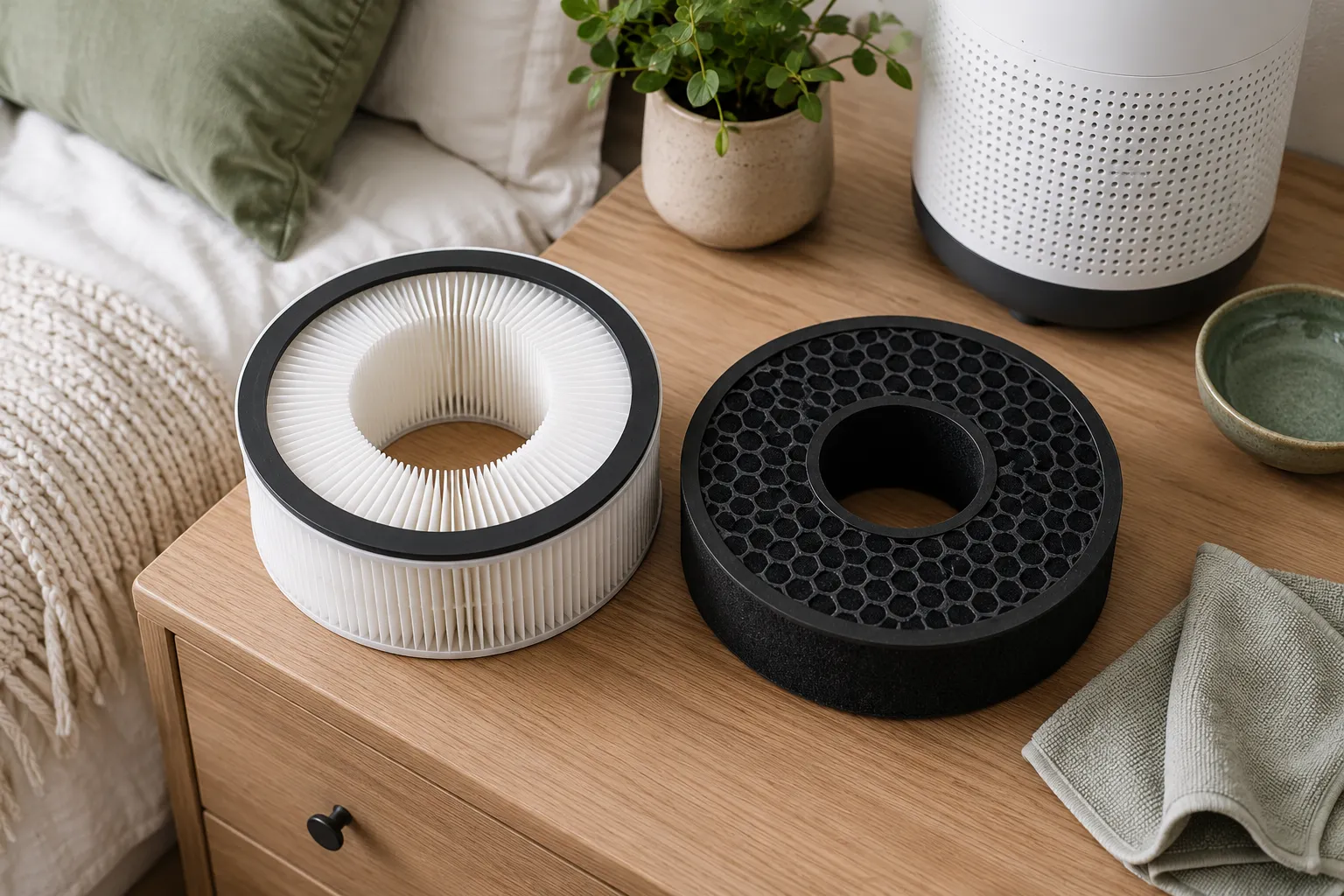
The simpler way to think about it is this: HEPA is for particles. Activated carbon is for smells and some gases. If your nightstand gets dusty, your dog sleeps near the bed, or pollen drifts in through the window, HEPA is the filter to understand first. If your bedroom picks up cooking smells, pet odors, smoke smell, or that stale closed-room scent, activated carbon matters more.
For many bedroom users, especially apartment dwellers, the best answer is not HEPA versus activated carbon. It is a purifier that uses both.
Quick Answer
Choose a HEPA filter if your main concern is dust, pollen, pet dander, lint, or fine smoke particles.
Choose activated carbon if your main concern is cooking smells, pet smells, smoke odor, fragrance, stale air, or new furniture smells.
Choose both if you live in an apartment, share your bedroom with pets, deal with smells from the kitchen or hallway, or want one bedroom purifier that handles common particles and everyday odors.
Do not expect either filter to fix the source of the problem. An air purifier can only filter the air that passes through it. It does not remove the source of dust, smoke, moisture, mold, or strong chemical odors.
HEPA vs. Activated Carbon at a Glance
| Bedroom concern | Better filter to look for | Why it matters |
|---|---|---|
| Dust on furniture | HEPA | Dust is made of airborne and settled particles |
| Pollen from windows or clothes | HEPA | Pollen is a particle |
| Pet dander | HEPA | Dander is a particle, not an odor |
| Pet smell | Activated carbon | Odor needs a gas/odor-focused filter |
| Cooking smells | Activated carbon | Food odors can pass through particle-only filters |
| Smoke particles | HEPA | Fine smoke particles need particle filtration |
| Smoke smell | Activated carbon | Many odor-causing gases are not captured well by particle filters |
| Small apartment bedroom | Usually both | Apartments often have both dust and odor transfer |
| Stale room smell | Activated carbon, plus ventilation when practical | Carbon may help, but the room still needs source control |
What a HEPA Filter Does in a Bedroom
HEPA Is the Particle Filter
A HEPA filter is a mechanical filter. Air moves through the purifier, and the filter captures tiny particles along the way.
In a bedroom, those particles can come from bedding, rugs, pets, laundry, open windows, hallway air, or outdoor smoke that gets inside. Bedrooms are also full of soft materials: sheets, pillows, blankets, curtains, clothes, and rugs. These can hold and release lint, dust, and small particles every time you make the bed, open the closet, or let a pet jump up.
If your room feels dusty soon after cleaning, HEPA is probably the filter you should focus on first.
What HEPA Is Useful For
HEPA is the filter type to prioritize for:
- Dust that settles on nightstands, shelves, and dressers
- Pollen that comes in through windows or on clothing
- Pet dander from cats or dogs
- Fine smoke particles
- Lint and small fibers from bedding, rugs, and laundry
That does not mean a HEPA purifier makes the room perfectly clean. It filters air that passes through the machine. Room size, fan speed, placement, and filter maintenance all affect how useful it is in daily life.
What HEPA Does Not Do Well
HEPA is not mainly an odor filter. If your bedroom smells like cooking, pets, smoke, perfume, cleaning spray, or new furniture, a HEPA filter alone is not the right tool for that problem.
It also does not fix the reason the room is dusty. If dust is coming from old carpet, open windows, cluttered fabric storage, or a rarely cleaned vent, a purifier can support the room, but your cleaning routine still matters.
Think of HEPA as help for airborne particles, not a replacement for dusting, vacuuming, washing bedding, or reducing the source.
What an Activated Carbon Filter Does
Activated Carbon Is the Odor Filter
Activated carbon is used for odors and some gases. Instead of catching dust like a net, carbon works more like a chemical sponge. It gives certain odor-causing gases and VOCs, or volatile organic compounds, a place to stick as air passes through the filter.
That makes it useful when the bedroom problem is not visible dust but smell: food drifting in from the kitchen, smoke odor from outside, pet smells near the bed, or a room that feels stale after the door has been closed all day.
This is especially relevant in apartments. Smells can come from compact kitchens, shared hallways, neighboring units, laundry rooms, or limited ventilation. You may not control the source, but you can still choose a filter setup that makes sense for the room.
What Carbon Is Useful For
Activated carbon may help with:
- Cooking smells that travel into the bedroom
- Pet odors from bedding, crates, or litter boxes
- Smoke smell from outdoors or nearby units
- Stale air in a closed bedroom
- Fragrance, candle, or cleaning product smells
- New rug, mattress, paint, or furniture odors
The key is to keep expectations realistic. Carbon can help with everyday odors, but it cannot keep up with every strong or ongoing source.
If cooking smells are the issue, use the range hood if you have one, close the bedroom door while cooking, and run the purifier before bedtime. If pet odor is the issue, wash pet bedding and clean the source. If new furniture smells strong, air it out when practical before placing it near the bed.
Why Some Carbon Filters Disappoint
Not every carbon filter has the same odor capacity. Some air purifiers use a very thin carbon-coated sheet. Others use a separate carbon filter with more material.
If odor control is one of your main reasons for buying a purifier, do not stop at the phrase carbon filter. Look for signs of a more substantial carbon design, such as:
- A dedicated, replaceable carbon filter
- Granular or pelletized activated carbon
- A visibly thicker carbon layer
- Product details that explain the carbon filter, not just odor control
- Replacement filters that include a separate carbon component
A thin, fabric-like carbon sheet may help with light everyday smells, but it may saturate faster and do less for persistent cooking odor, pet smell, or smoke smell. More carbon material usually means more odor-holding capacity, but many brands do not clearly disclose the amount, so use the filter design as a practical clue.
Also remember that carbon gets used up. If a purifier helped with odors at first but no longer seems to, the carbon filter may need replacement.
Do You Need HEPA, Carbon, or Both?
Choose HEPA First If the Room Is Dusty
If the main problem is dust on surfaces, pollen, pet dander, or smoke particles, start with HEPA. Also check CADR, which helps show how much filtered air the unit can deliver for particles.
This matters in a bedroom because many people run purifiers on lower speeds at night. A purifier that only performs well on its loudest setting may not be realistic while you sleep.
Add Carbon If the Room Smells
If the room smells stale, smoky, pet-heavy, or affected by cooking, look for activated carbon. This is often worth it in apartments, studios, shared homes, and bedrooms close to kitchens.
Carbon can be especially useful when you want the bedroom to feel more settled at night. It will not create perfect air, but it can help reduce everyday odor buildup when used with good routines.
Choose Both for Most Apartment Bedrooms
Many apartment bedrooms have more than one issue. You may have dust from the window, pet dander on the rug, and dinner smells drifting in from the kitchen.
In that case, a purifier with both HEPA and activated carbon is usually the more practical setup. The goal is not to buy the most complicated machine. The goal is to match the filter stack to the room you actually live in.
Match the Filter to Your Bedroom Situation
If Your Nightstand Gets Dusty Fast
Look for HEPA filtration and a CADR that fits your room size. Keep the purifier in the bedroom, not down the hall. Give it open space so air can move through it.
Also check the basics: wash bedding regularly, vacuum soft surfaces, and avoid storing piles of clothes or blankets near the purifier’s intake.
If Pollen Gets Into Your Bedroom
Prioritize HEPA. Close windows when outdoor pollen is high, change pillowcases often, and keep worn outdoor clothes off the bed.
The purifier is a home comfort tool. It can reduce some airborne particles passing through the unit, but it should not be treated as a medical solution.
If Your Pet Sleeps in the Room
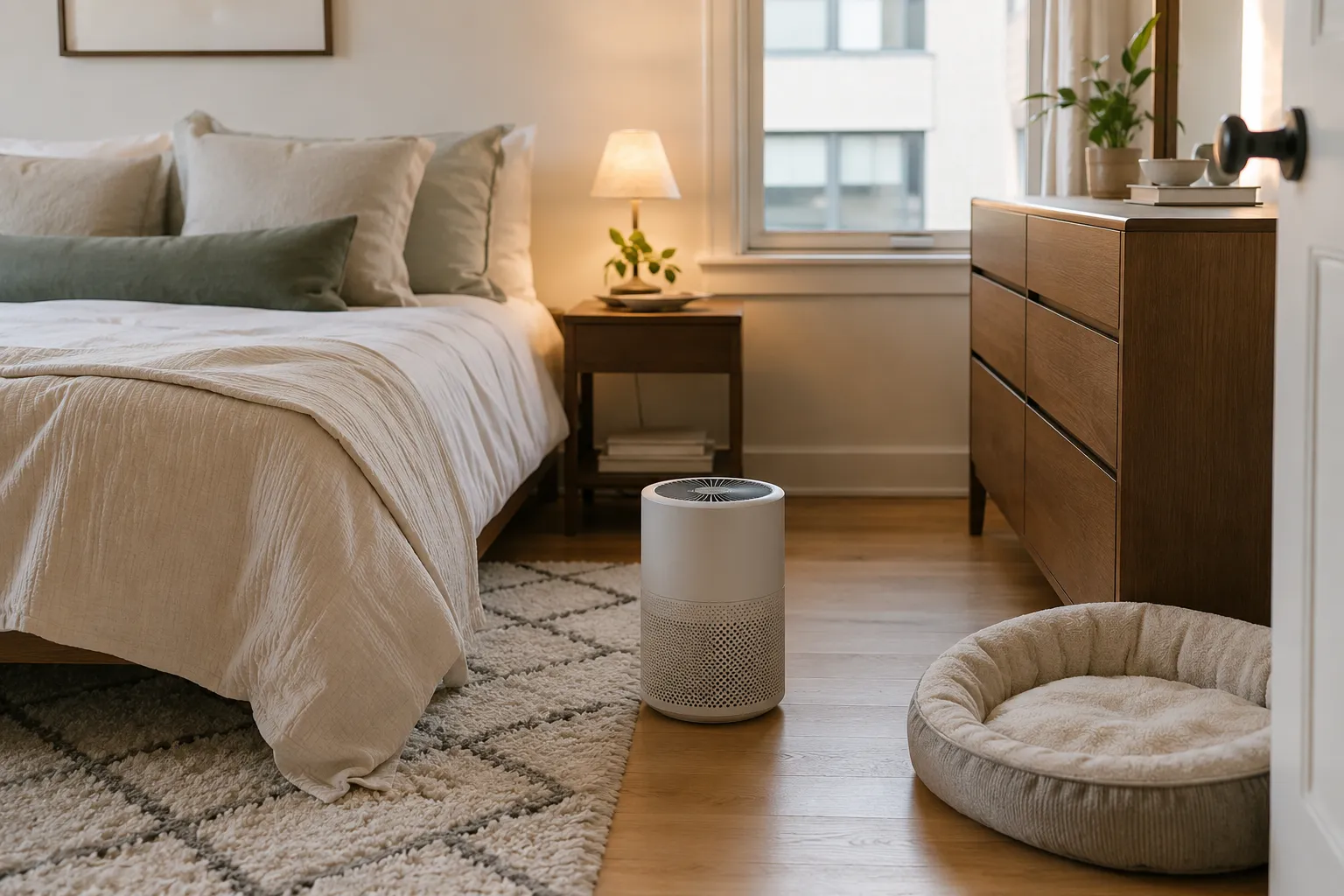
For pet dander, HEPA matters. For pet smell, carbon matters. If your pet sleeps on the bed or has a crate nearby, both filters can make sense.
The purifier will work better as part of a simple routine: wash pet bedding, vacuum rugs, and keep litter boxes or pet areas clean.
If Smoke Is the Concern
Smoke has both a particle side and an odor side. HEPA is the filter to look for if you are concerned about fine smoke particles. Activated carbon is the filter to look for if smoke smell lingers.
During poor outdoor air conditions, keep windows closed and run the purifier in the room where you spend time. If smoke is coming from an ongoing indoor source, address the source directly instead of relying only on filtration.
If Cooking Smells Drift Into the Bedroom
This is usually more of a carbon problem than a HEPA problem. A carbon filter may help with lingering food smells, especially in a studio or small apartment where the kitchen and bedroom are close together.
Use kitchen ventilation when available. Close the bedroom door during cooking. Run the purifier before bedtime rather than waiting until the room already smells strong.
If the Room Smells Like New Furniture or Paint
Ventilation should come first when outdoor air is good and it is safe to open windows. Activated carbon can be a helpful support, but it should not be treated as a guarantee that every gas or odor is removed.
If a smell is strong, irritating, or persistent, reduce the source where possible.
What to Check Before Choosing a Bedroom Air Purifier
CADR and Room Size
CADR is used for particle removal. In simple terms, a higher CADR means the purifier can deliver more filtered air for particles.
Measure the bedroom before shopping. A 10-by-12-foot room is 120 square feet. If your room opens into another space or has high ceilings, you may need more capacity.
Filter Stack
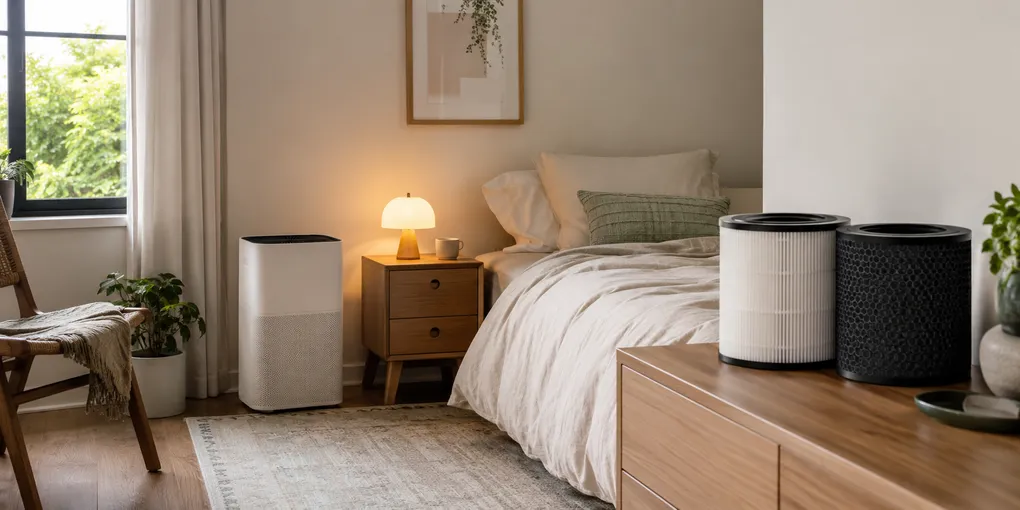
A typical purifier may include a pre-filter, a HEPA or HEPA-style filter, and an activated carbon filter.
The pre-filter catches larger debris like hair and lint. HEPA handles smaller particles. Carbon handles odors and some gases. Once you understand that stack, product descriptions become easier to read.
Carbon Filter Design
If odors matter, look for a dedicated carbon filter, granular carbon, pelletized carbon, or a thicker carbon layer. Be cautious with vague odor control language if the product does not show or describe the carbon filter clearly.
A thin carbon sheet may be fine for light smells. For frequent cooking odor, smoke smell, or pet odor, a more substantial carbon filter is a better sign.
Replacement Filters
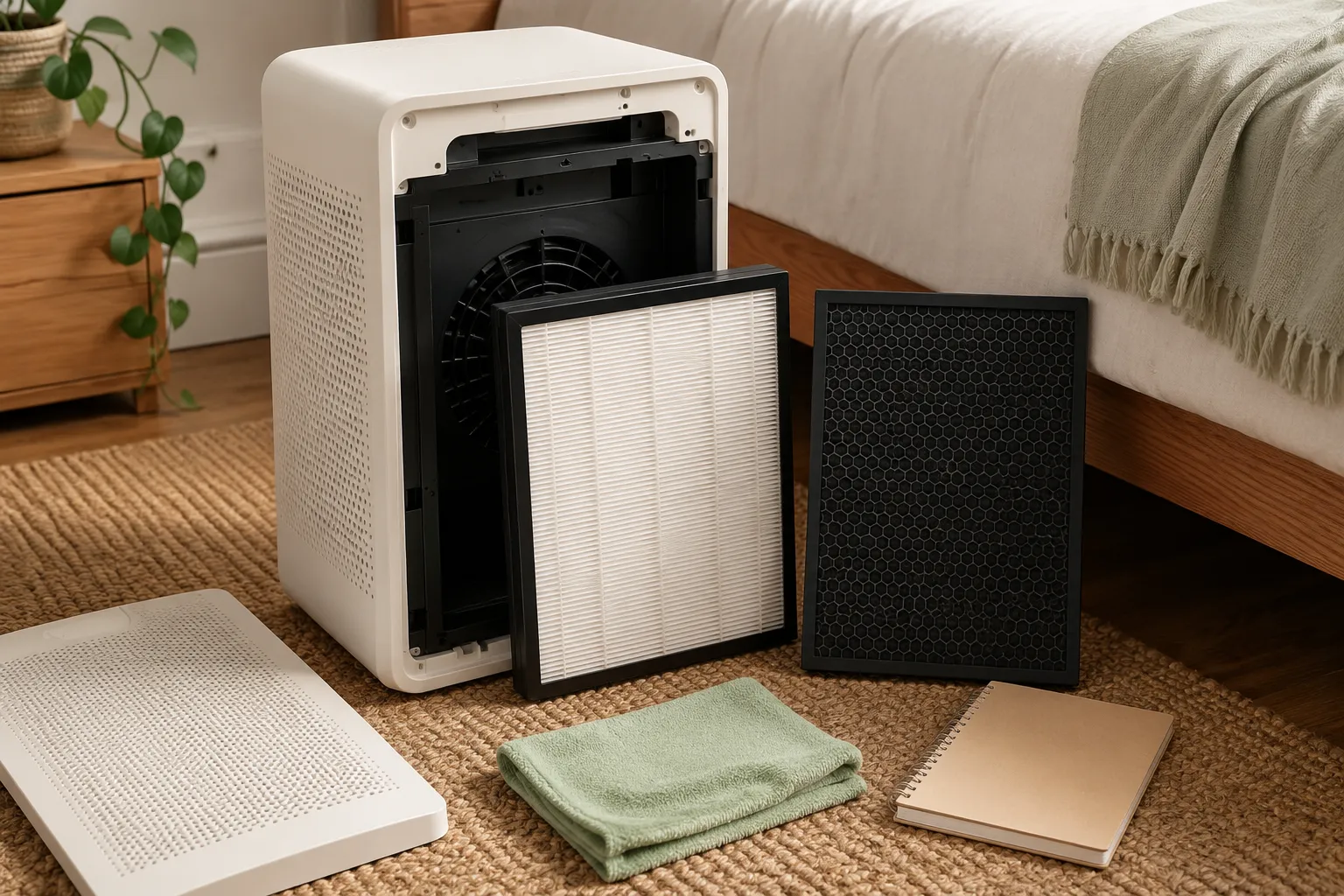
Filter replacement is part of owning an air purifier. Before choosing a unit, check whether replacement filters are easy to find and how often the maker recommends changing them.
A purifier with hard-to-find filters can become a hassle, even if the machine itself looks good.
Noise at Night
For bedroom use, noise matters almost as much as filter type. A purifier you turn off because it is annoying will not help much.
Look for a unit that can run at a comfortable lower speed while you sleep. Sleep mode can be useful, but lower speeds usually move less air.
Ozone and Ionizer Features
Be cautious with ozone-generating features and vague fresh air claims. For a bedroom, clear mechanical filtration is usually the simpler thing to prioritize.
If a purifier includes an ionizer or similar feature, check whether it can be turned off.
Common Mistakes to Avoid
Buying Only by Room-Size Claims
Room-size claims can be hard to compare. CADR, fan speed, and your actual bedroom size are more useful.
Hiding the Purifier in a Corner
Airflow matters. Do not tuck the purifier behind curtains, under a desk, inside a closet, or against a pile of laundry.
Running It Only After the Room Already Smells Bad
For everyday bedroom use, steady operation on a comfortable setting is often more practical than short bursts after odors build up.
Ignoring the Source
If there is mold, moisture, active smoking indoors, a gas leak, or a strong chemical source, do not expect a bedroom purifier to solve it. Handle the source first.
FAQ
Is HEPA or activated carbon better for a bedroom air purifier?
HEPA is better for particles like dust, pollen, dander, and smoke particles. Activated carbon is better for odors and some gases. Many bedrooms benefit from both.
Do I need activated carbon if I already have HEPA?
You may not need much carbon if your only concern is dust or pollen. If your bedroom has pet smells, cooking odors, smoke smell, or stale air, carbon is worth looking for.
What is better for pets?
Use HEPA for pet dander and activated carbon for pet smells. Pet bedrooms often benefit from both.
What is better for smoke?
HEPA helps with fine smoke particles. Activated carbon helps with smoke odor. For smoke-related concerns, both filters are useful.
Is activated carbon worth it in an apartment?
Often, yes. Apartments are more likely to have cooking smells, hallway odors, pet smells, and neighbor-related odor transfer.
Can I run a bedroom air purifier with the window open?
It is usually better to keep windows closed while the purifier is running, especially during pollen, smoke, or high-dust conditions. An open window keeps bringing in new outdoor air, which makes it harder for the purifier to make a noticeable difference in the room.
When outdoor air is good and the room smells stale, ventilating for a short period can still be useful. Just do not expect the purifier to clean the room effectively while outdoor air is constantly flowing in.
Where should I put a bedroom air purifier?
Place it where airflow is open. Keep it away from curtains, bedding, walls that block the intake, and clutter. Put it in the room you actually want to filter.
How often should filters be replaced?
Follow the manufacturer’s schedule. Replace filters sooner if they look heavily loaded or if odor control noticeably drops.
Final Thoughts
For a bedroom air purifier, the real question is not HEPA or activated carbon? It is What problem am I trying to solve?
If the problem is dust, pollen, dander, lint, or smoke particles, HEPA should be your starting point. If the problem is cooking smell, pet odor, smoke smell, fragrance, or stale air, activated carbon matters. If your bedroom has both kinds of problems, especially in an apartment or small home, choose a purifier with both.
Keep the setup simple: match the purifier to the room, keep airflow clear, replace filters on schedule, and deal with odor or dust sources when you can. The right filter combination should make your bedroom feel easier to live in, not turn air purifier shopping into another chore.