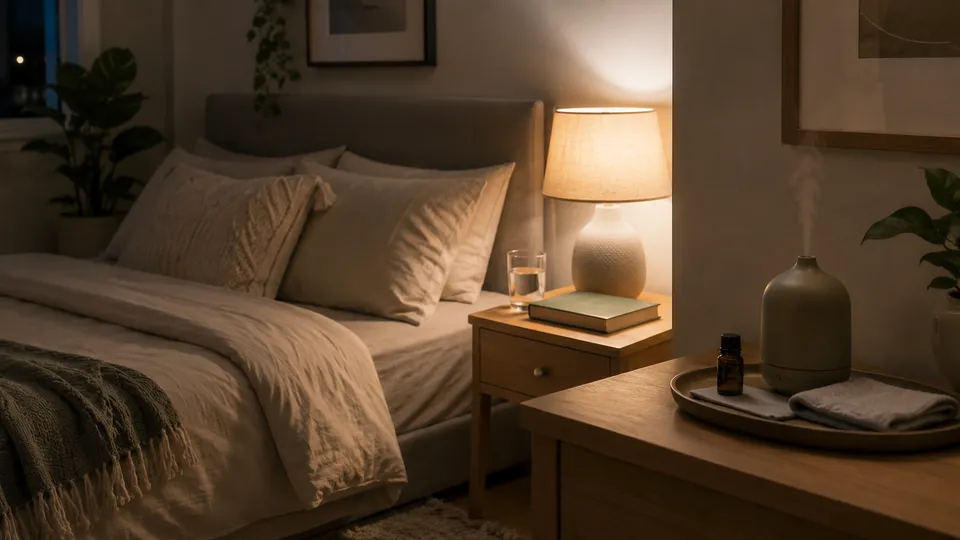
A bedroom is one of the easiest places to overdo a diffuser. The space is usually smaller than a living room, the door may be closed, and the diffuser often ends up near your bed. A scent that feels barely noticeable in an open space can feel heavy when it is sitting on a nightstand.
That is why choosing a bedroom essential oil diffuser is less about finding the strongest mist and more about finding the right level of control. For most bedrooms, you want something quiet, compact, easy to clean, and simple to turn off before the room feels overscented.
This guide is written for beginners, renters, small-bedroom users, and anyone who wants a practical way to add a light scent to a bedroom without making the space feel fussy.
Quick Answer
For most bedrooms, choose a compact ultrasonic diffuser with a timer, auto shut-off, adjustable mist, quiet operation, and lights that can fully turn off. If your room is small, prioritize low settings over strong output.
A good bedroom diffuser should fit into a short routine. For example, you might run it while reading for 30 minutes, then let it shut off before you go to sleep. You should also be able to clean it without fighting tiny corners or complicated parts.
The simplest buying rule: choose the diffuser that is easiest to use lightly, place safely, and maintain consistently.
Start With the Right Diffuser Type
Ultrasonic Diffusers
Ultrasonic diffusers are usually the easiest option for beginners. They use water and vibration to create a fine mist that carries scent into the room.
For a bedroom, this style often works well because many models are compact, quiet, and available with timer settings. They are a good fit if you want a light scent while reading, tidying up, stretching, or getting ready for bed.
The main tradeoff is cleaning. Since the tank holds water, it needs regular emptying, wiping, and drying according to the manufacturer’s instructions. If you know you will not clean a water tank regularly, this may not be the best style for your bedroom.
Nebulizing Diffusers
Nebulizing diffusers use essential oil without water. They usually create a stronger scent than ultrasonic models.
That stronger output can be useful in larger spaces, but it may be too much for a small bedroom, studio, or dorm-style room. If you are new to essential oils or sensitive to fragrance, start with a gentler option first.
Reed Diffusers
Reed diffusers do not use electricity, mist, or buttons. They release scent slowly through reeds placed in fragrance oil.
This can work well for renters who want no cord, no water tank, and no operating noise. The downside is that you cannot turn the scent off quickly. Reed diffusers also need a stable surface because spills can stain or damage furniture.
In a bedroom, a reed diffuser usually makes more sense on a dresser or shelf than on a crowded nightstand.
Choose the Right Size for Your Room
Bigger is not better in a bedroom. A large diffuser may run longer, but that does not mean it will make the room more comfortable.
For a small bedroom, look for low mist output, intermittent mode, and short timer settings. A modest tank is often enough if you only plan to use the diffuser during an evening wind-down routine.
Be careful with coverage claims on the box. Manufacturers often calculate these numbers in controlled spaces, not in real bedrooms with furniture, curtains, open closets, rugs, and uneven airflow. Prioritize a machine with multiple output speeds over one boasting a massive square-footage rating.
If your bedroom opens into a hallway or bathroom, adjustable output gives you flexibility. If your room is compact and usually closed, a low setting will matter much more than a large tank.
Look for Timer Settings and Auto Shut-Off
A timer is one of the most useful bedroom features because it keeps the diffuser from running longer than needed.
Look for simple options such as 30 minutes, 1 hour, 2 hours, or intermittent mist. Intermittent mode is especially helpful in small rooms because it releases scent in intervals instead of continuously filling the space.
Auto shut-off is also important for water-based diffusers. It turns the unit off when the water runs low. For beginners, this should be a basic requirement, not a luxury feature.
Even with auto shut-off, follow the manual. A diffuser still combines water, electricity, and essential oils, so basic care and safe placement matter.
Check Noise and Light Before You Buy
A bedroom diffuser can be labeled quiet and still be annoying at night. Think about the specific sounds it might make: soft bubbling, vibration, fan noise, button beeps, or shut-off alerts.
If you are sensitive to sound, avoid placing the diffuser right beside your pillow. A dresser across the room may still provide enough scent without putting noise close to your head.
Lights deserve the same attention. Many diffusers include color-changing LEDs, glowing buttons, or night-light modes. Those features can look appealing in product photos, but they may feel distracting in a dark bedroom.
Look for a diffuser that lets you turn all lights off. Dimming is helpful, but full shut-off is better for people who prefer a darker room.
Make Cleaning Easy
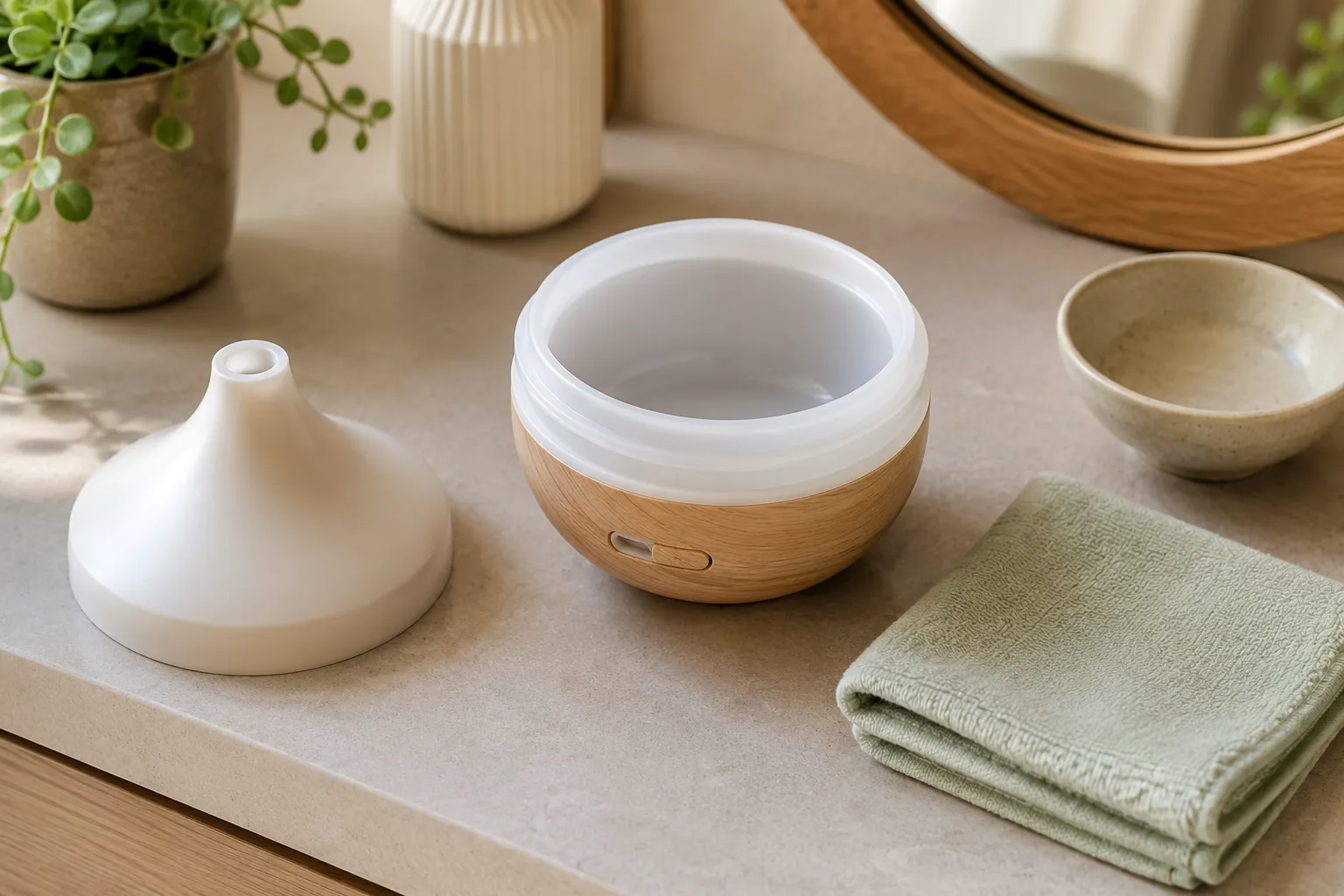
A diffuser that is hard to clean will probably not be cleaned often enough.
Look for a wide tank opening, smooth interior, and simple cover. Avoid designs with tiny openings, deep grooves, or decorative shells that make it difficult to reach the water reservoir.
A realistic routine is simple: empty leftover water, wipe the tank as directed, and let the parts dry before the next use. Essential oils can leave residue, and standing water should not sit in the tank for days.
Check the manual before using vinegar, soap, brushes, or cleaning tablets. Different diffusers use different materials and parts. Always unplug the unit before cleaning.
Know What a Diffuser Is Not
An essential oil diffuser is mainly for scent. It is not the same as a true humidifier.
Some ultrasonic diffusers create visible mist, which can make them look like mini humidifiers. But most bedroom diffusers have small tanks and are designed for fragrance, not serious humidity control.
If dry air is your main problem, look for a humidifier instead. If your goal is a light scent during a short routine, a diffuser is the better match.
Also, do not add essential oils to a regular humidifier unless the manual clearly says it is allowed. Oils can leave residue or damage parts in devices that are not designed for them.
Place It Carefully in a Bedroom
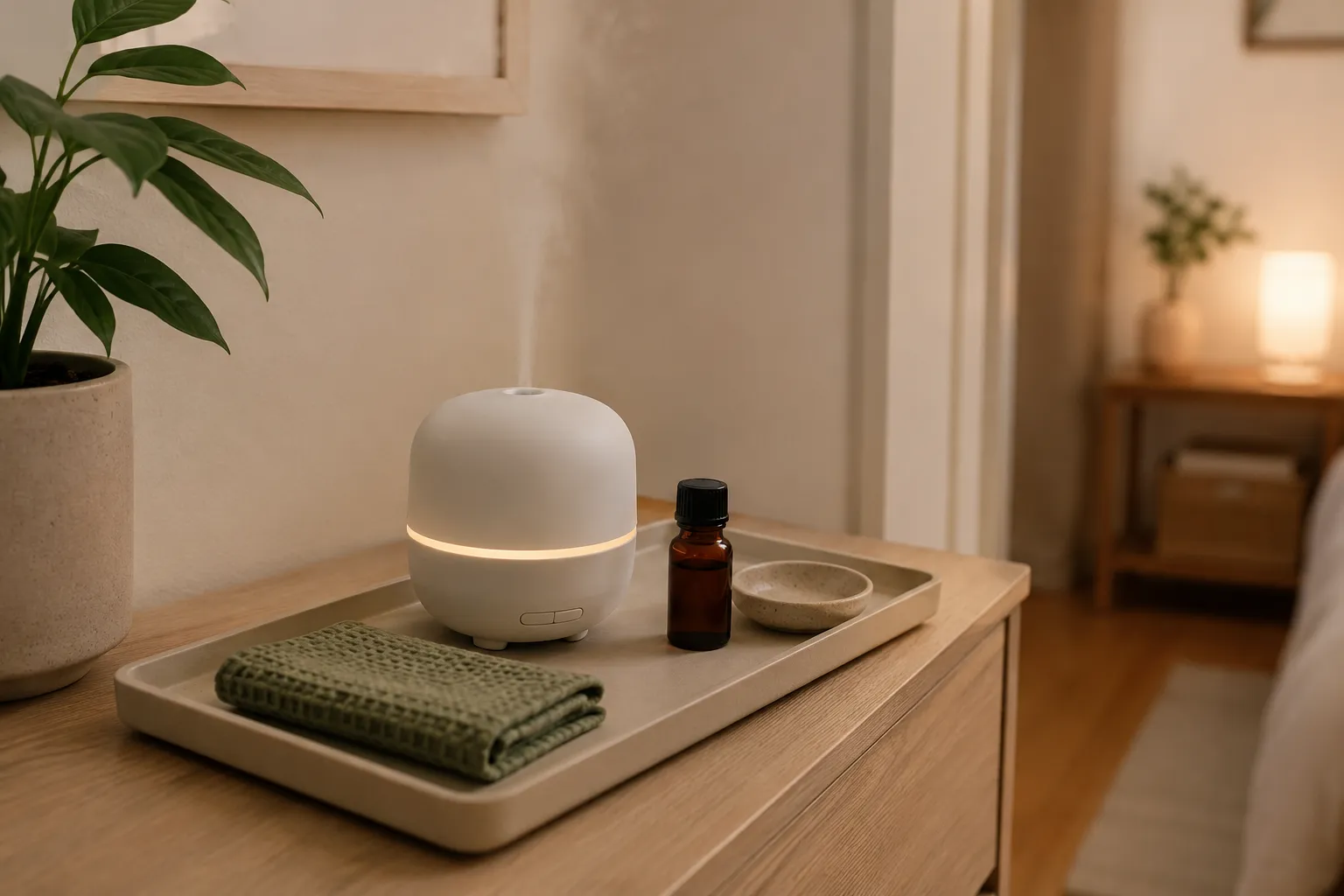
Diffuser placement matters, especially in rentals and small rooms.
Never aim the mist output directly at fabrics or electronics. Over time, the fine water vapor and oil residue can affect book pages, laptop keyboards, wood finishes, or upholstered surfaces. Keep a clear area above and around the nozzle so mist can disperse without landing directly on nearby items.
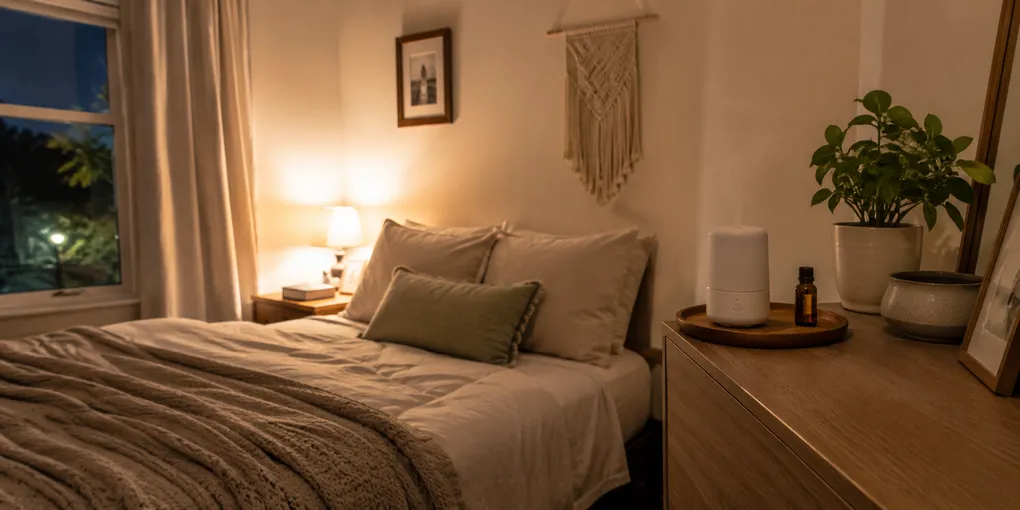
A dresser, shelf, or small table across the room often works better than a nightstand. The scent can still reach the space without placing the unit beside your face.
Renters should consider using a small tray under the diffuser. This helps protect furnished-apartment surfaces, wood nightstands, and dressers from drips or oil residue.
Also check the cord. Avoid stretching it across a walkway or tucking it into a cluttered corner near bedding. A good diffuser spot is flat, stable, dry, and easy to reach.
Use a Lighter Scent Than You Think
In a bedroom, subtle is usually better.
Start with fewer drops than the maximum amount listed in the instructions. Let the diffuser run for 10 to 20 minutes, then step out and come back in. If the scent is obvious when you return, you probably do not need more.
For small rooms, low mist plus a short timer is often enough. If the scent feels heavy, turn the diffuser off and open the door or window for fresh air.
This is also a good reason to avoid buying only for power. A bedroom diffuser should give you control. The goal is not to fill the room with fragrance; it is to add a soft background scent that does not dominate the space.
Consider Pets, Kids, and Roommates
Essential oils are concentrated products, so handle them carefully.
Keep oil bottles closed, upright, and away from children and pets. Do not leave them loose on a crowded nightstand where they can tip over. Keep the diffuser itself out of reach if it could be knocked down.
Pet owners should be especially cautious. Avoid running a diffuser in a closed room where a pet cannot leave. Cats, birds, small animals, and pets with breathing sensitivities need extra care. If you are unsure whether a diffuser is appropriate for your home, ask your veterinarian.
Shared homes need consideration too. In apartments, dorms, and shared bedrooms, scent can travel. A fragrance that seems mild to you may bother a roommate, partner, or guest. Start low and check in with the people who share your space.
Feature Showdown: Essentials vs. Extras
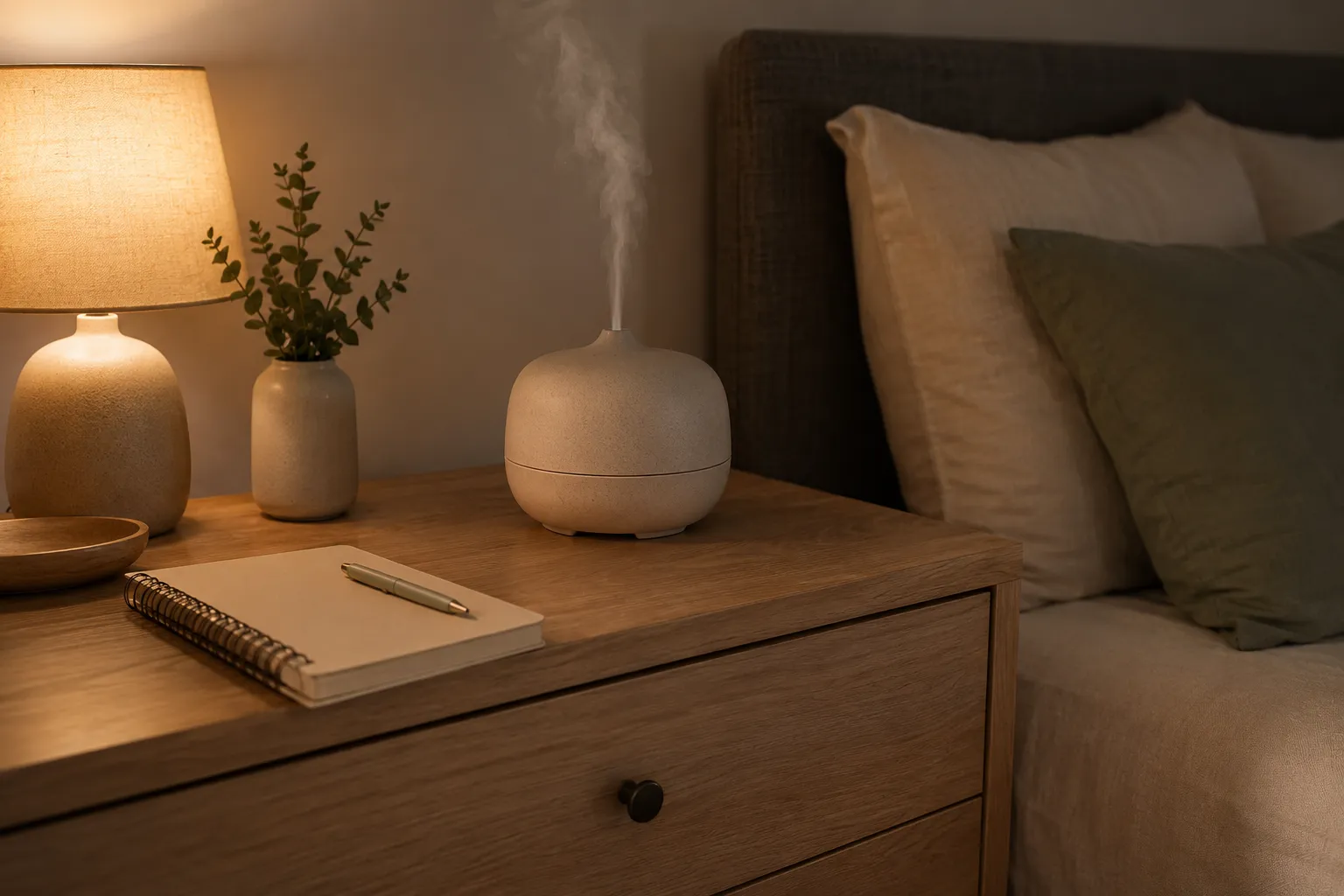
Some diffuser features are worth prioritizing because they affect daily use. Others are mostly about convenience or style.
Essentials for most bedrooms:
- Timer settings
- Auto shut-off
- Adjustable mist
- Intermittent mode
- Lights that turn fully off
- Easy-fill tank
- Easy-clean design
- Stable base
Nice but not essential:
- Remote control
- App scheduling
- Decorative ceramic or stone covers
- Rechargeable battery
- Built-in night-light
- Ambient sound machines or white noise loops
Most beginners can skip oversized tanks, very strong output, and complicated smart features. If the diffuser is hard to clean, too bright, or too strong for your room, extra features will not make it better.
When a Diffuser May Not Be the Right Choice
A bedroom diffuser is not right for everyone.
If you are very sensitive to fragrance, even a low setting may feel like too much. If your pet sleeps in your room and cannot leave freely, a diffuser may not be a good fit for that space. If you do not want another item to clean, a water-based diffuser may become more trouble than it is worth.
There is nothing wrong with choosing a no-fragrance bedroom. Clean sheets, better airflow, soft lighting, and less clutter can also make a bedroom feel calmer and more comfortable.
Bedroom Diffuser Buying Checklist
Before you buy, ask:
- Is it quiet enough for night use?
- Does it have auto shut-off?
- Does it have a 30- or 60-minute timer?
- Can the mist level be lowered?
- Can all lights turn off?
- Is the tank easy to wipe clean?
- Is the base stable?
- Will it fit somewhere away from bedding?
- Does the cord work with your outlet layout?
- Is it appropriate for pets, kids, or roommates in your home?
If you answer no to several of these, keep looking. A bedroom diffuser should make your routine easier, not add new annoyances.
FAQ
What type of essential oil diffuser is best for a bedroom?
Most beginners will do best with a compact ultrasonic diffuser. It is usually simple to use, gentle enough for bedrooms, and available with timer settings.
What size diffuser is best for a small bedroom?
Choose a compact diffuser with low mist output and a timer. A large tank is not necessary if you only plan to run it for a short evening routine.
Should I run a diffuser all night?
A short timer is usually more practical than all-night use. Try running the diffuser for 30 to 60 minutes, then letting it shut off.
How many drops of essential oil should I use?
Start with fewer drops than the maximum amount in the instructions. Small bedrooms can become overscented quickly, so begin lightly and adjust only if needed.
Where should I put a diffuser in a bedroom?
Place it on a flat, stable surface away from fabrics, electronics, books, and power strips. A dresser or shelf across the room is often better than a crowded nightstand.
Is a diffuser the same as a humidifier?
No. A diffuser is mainly for scent. A humidifier is designed to add moisture to the air. If dry air is your main concern, choose a humidifier instead.
Are essential oil diffusers safe around pets?
Use caution. Keep oils and diffusers out of reach, avoid enclosed rooms where pets cannot leave, and ask a veterinarian if you are unsure.
Are smart diffusers worth it for bedrooms?
They can be convenient, but they are not necessary. Timer settings, auto shut-off, quiet operation, light control, and easy cleaning matter more.
Final Thoughts
The best bedroom essential oil diffuser is usually the simplest one that fits your space. For most people, that means a compact model with quiet operation, timer settings, auto shut-off, adjustable mist, and an easy-clean tank.
For small bedrooms and rentals, control matters more than power. Use less oil, run the diffuser for a shorter time, and place it away from surfaces that could be affected by mist or oil residue.
A diffuser does not need to be a major purchase or a daily ritual. Used thoughtfully, it can be one small part of making a bedroom feel more comfortable and personal.